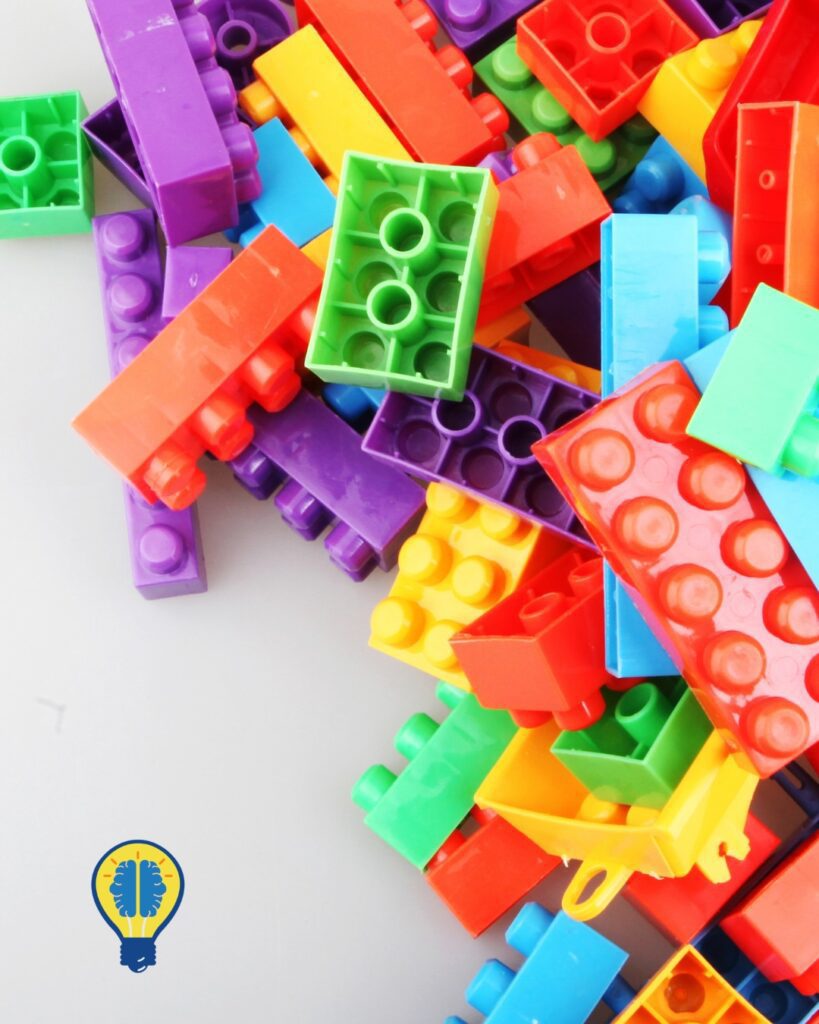
World Play Day: Why Serious Workplaces Need More “LEGO Thinking”
With World Play Day 2026 approaching on the 11th June, it inspired us to write this article.
There is a persistent misconception in corporate environments that play is the opposite of productivity.
That if something feels light, exploratory, or unstructured, it must be less serious. Less valuable. Less “work.”
But the evidence tells a very different story.
The most adaptive, innovative, and high-performing organisations are not the ones that eliminate play from their culture, they are the ones that understand how to integrate it deliberately.
Not as entertainment.
As a performance mechanism.
We have confused seriousness with effectiveness
Somewhere along the way, many workplaces began to equate intensity with impact.
Back-to-back meetings. Constant optimisation. Endless delivery cycles.
But cognitive science has been clear for some time: the human brain does not produce its best work in sustained states of pressure and rigidity.
It produces its best work when it is able to move between focus and exploration.
Between logic and imagination.
Between structure and play.
This is not soft thinking. It is neurological efficiency.
Play is not a distraction. It is a cognitive function.
When we talk about “play” in a workplace context, we are not talking about distraction or downtime.
We are talking about a mental state that enables:
- Pattern recognition
- Creative problem-solving
- Psychological safety
- Reduced cognitive threat response
- Higher-order thinking under ambiguity
In other words, the exact conditions required for complex work.
This is why approaches like LEGO Serious Play have been adopted in leadership development and strategy environments. Not because they are playful in a superficial sense, but because they externalise thinking.
They turn abstract ideas into tangible models that people can interrogate, challenge, and refine.
That shift alone changes the quality of conversation in a room.
The real cost of removing play from work
When organisations remove space for exploratory thinking, they do not increase efficiency.
They reduce adaptability.
Teams become faster at executing known solutions, but slower at discovering better ones.
And in environments defined by constant change, that is a dangerous trade-off.
We see it in:
- Repeated decision cycles with diminishing innovation
- “Safe” ideas winning over better ones
- Burnout disguised as commitment
- Creativity outsourced rather than cultivated
The absence of play does not create discipline.
It creates rigidity.
High performance environments already understand this
The most forward-thinking organisations do not frame play as a wellness perk.
They treat it as a strategic input.
Because they recognise something fundamental:
Complex problems cannot be solved using linear thinking alone.
They require cognitive flexibility — the ability to switch modes of thinking quickly, and deliberately.
Play facilitates that shift.
It loosens fixed assumptions.
It reduces the fear of being wrong.
It opens up alternative interpretations of the same problem.
And in doing so, it improves the quality of decisions.
World Play Day is not a symbolic moment — it is a reminder
If there is one takeaway from World Play Day, it is this:
We do not need less seriousness at work.
We need a better definition of it.
Serious work is not about being constrained.
It is about being capable.
Capable of seeing differently.
Capable of thinking laterally.
Capable of holding complexity without collapsing into rigidity.
That capability is not built through pressure alone.
It is built through environments where thinking is allowed to move.
Where ideas can be shaped, tested, rebuilt.
Where “play” is not dismissed — but designed in.
Final thought
The future of work will not be defined by who works the hardest in a traditional sense.
It will be defined by who thinks the most effectively under complexity.
And that requires something many organisations have quietly engineered out of their systems:
The space to play with ideas before committing to them.
Because sometimes, the most serious work a team can do…
is to stop treating every idea as final from the outset.
How will you be celebrating World Play Day 2026 in your organisation?
Get Featured
If your organisation would like to be featured or in our spotlight series celebrating the great things you do for your people at wok, then please, get in touch to discuss further.
Check out our previous spotlight on Ikea.